Dogs do all sorts of things that make us raise an eyebrow. They bark at nothing, dig up the garden, zoom around the house, and sometimes do awkward things like hump their favourite toy. If you’ve ever wondered, “Why is my dog doing that?” — you’re not alone. Many behaviours that puzzle us are actually completely normal in the dog world.
Understanding what drives these common dog behaviours can help us respond in a way that’s kind, effective, and even beneficial for our dog’s wellbeing. Let’s explore a few of the most common ones and how to handle them.
Dogs bark to communicate. It could be excitement, fear, frustration, boredom, or even a learned behaviour that gets them attention. Barking at the window when someone walks past? That’s usually about territory and alerting you. Barking for no obvious reason? Your dog may hear or smell something you can’t.
Rather than trying to stop barking entirely (which isn’t fair or realistic), focus on what your dog is trying to tell you. If it’s excessive, ask yourself: are they under-stimulated? Do they need more walks, play or mental enrichment? Teaching a “quiet” cue or redirecting to a chew toy can help manage the noise without punishing communication.
Looking for training advice for a barky dog? Try these tips from Dogs Trust

Embarrassing as it can be, humping isn’t always about sex. Many dogs hump when they’re overstimulated, excited, anxious, or simply trying to release some tension. Some even do it when they’re overtired or trying to initiate play.
Redirecting with a toy, a training cue, or a quick break can help. If it becomes excessive, check in with your vet or a qualified behaviourist to rule out any underlying issues.
The PDSA offers advice on humping and other social behaviours.
Dogs explore the world with their mouths. Chewing helps relieve stress, provides stimulation, and can be comforting—especially for puppies or anxious dogs. If your dog’s chosen chew toy is your furniture, the issue isn’t that they like chewing, but that they don’t have enough suitable outlets.
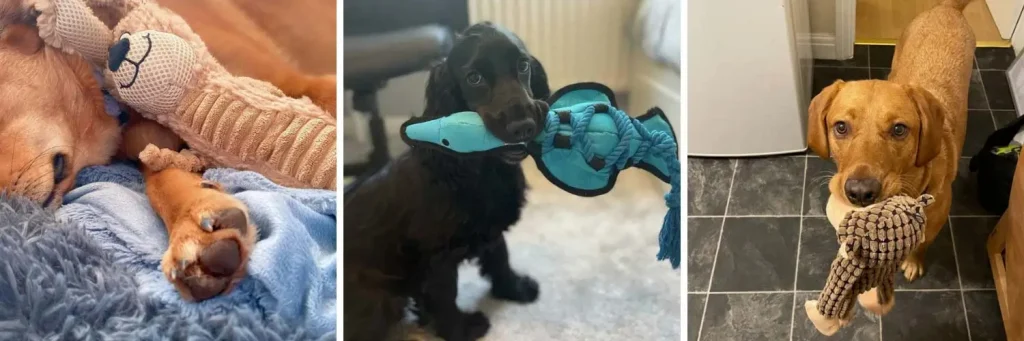
Make sure they’ve always got access to safe chew toys. Our gift boxes often include tough toys and chews designed to meet this exact need—and they’re way more fun (and cheaper) than a new coffee table.
If you think some new toys might help your dog, check out our Dog Toy Box.

The zoomies—those random bursts of frantic running—are perfectly normal and usually a sign of joy or stress relief. Dogs might get the zoomies after a bath, when you come home, or during play. There’s no need to stop it (as long as they’re safe)—it’s a lovely reminder of how happy and carefree dogs can be.
Learning about common dog behaviours helps us become more patient and responsive owners. If a behaviour is problematic, chances are your dog isn’t being naughty—they’re trying to meet a need. Understanding that, and providing alternatives, is the key.
You can:
If you’re dealing with behaviour that’s distressing or feels unmanageable, don’t hesitate to speak to a qualified trainer or behaviourist. The APDT UK is a good place to start.
Dogs don’t come with instruction manuals, but they do come with instincts, emotions and needs. Behaviours we might call ‘naughty’ often have very normal explanations. With a little knowledge and the right tools, we can help our dogs thrive in a world that doesn’t always make sense to them.
And if you’re looking for enrichment tools or toys to help manage chewing, barking, or zoomie-level energy, our dog gift boxes are packed with playful, purposeful goodies to keep tails wagging and minds happy.
Explore our dog gift boxes and find your pup’s new favourite toy